

Size Guide Women: How to Measure and Find Your Fit
You're in the dressing room with your usual size in hand. The dress zips, but it pulls across your ribs, the waistband sits somewhere it shouldn't, and the tag offers no clue whether the design was meant to skim, hug, or compress. A women's size guide works best when you treat it as a measurement conversation, not a verdict attached to a letter.
This guide puts the tape measure first. You'll learn where to measure your bust, waist, hips, and inseam, how stretch and structure change the decision, how to compare regional labels, and how to judge corset minis, lounge sets, gingham skirts, and modest layers by the way they're engineered to fit.
Why Fit Matters More Than the Size on the Tag
A letter size is only a starting point. The actual fit depends on three things working together: your body measurements, the garment's intended silhouette, and the fabric's behavior. A structured woven dress has different rules from a stretch-knit set. A fitted corset mini needs controlled support, while a relaxed trouser needs room for movement.
Women's apparel charts traditionally center on bust, waist, and hip measurements, with inseam or arm length often added for greater precision. The ROXY women's apparel size guide illustrates this measurement-first approach across tops, bottoms, dresses, and outerwear. Letter labels translate poorly between brands because each company develops its own fit model, grading, ease, and size range.
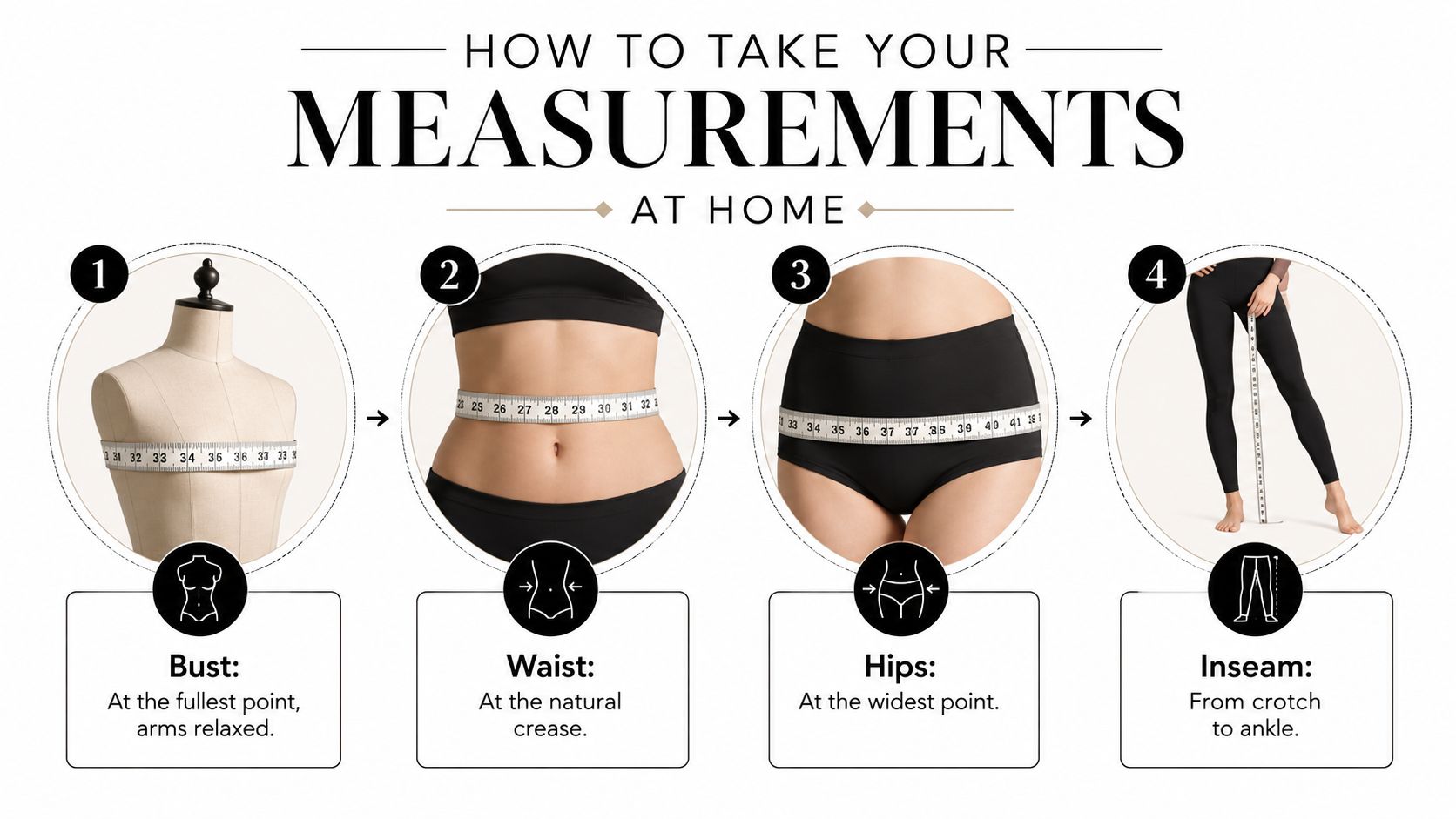
Start with four measurements before opening any chart:
- Bust: Around the fullest part of your chest, with your arms relaxed.
- Waist: Around the natural waistline, usually the smallest part of the torso.
- Hips: Around the fullest part of your seat, keeping your legs together.
- Inseam: From the crotch to the ankle or intended hem point along the inside leg.
Practical rule: Your largest relevant measurement usually deserves the final say, especially in a close-fitting garment.
Fit also changes with proportion. You might match a chart at the bust but need more room through the hips. You might have the right waist measurement for a skirt but prefer a longer inseam in trousers. That isn't a sizing failure. It's information about your shape and the garment's cut.
For bottoms, inseam can matter as much as waist and hip placement. A petite shopper may need a different trouser proportion even when the waist fits comfortably, which is why wide-leg pants for petite women deserve their own length and silhouette conversation.
The best size decision asks a better question than “What size do I wear?” Ask, “Where does this garment need to fit securely, and how much ease does the fabric allow?”
How to Take Your Bust, Waist, Hip, and Inseam Measurements
Measure at home in fitted clothing or the undergarments you'll wear beneath the piece. A bulky sweater, smoothing short, or padded bra can change the reading enough to send you toward the wrong row on the chart.
Stand naturally in front of a mirror. Keep the tape snug but not tight, and hold it parallel to the floor. Don't suck in your stomach or pull the tape across soft tissue. If possible, have someone read the measurement while you keep your posture relaxed.
Start at the bust
Wrap the tape around the fullest part of your bust, usually across the fullest point at the front and the broadest point across your back. Keep your arms relaxed at your sides. Check the mirror for a sagging section at the back, then take the reading without compressing your chest.
If you're measuring for a corset, fitted blouse, or structured dress, wear the bra or base layer you expect to use. The bust measurement controls whether the garment closes cleanly or pulls across the chest.
Find the natural waist
Place the tape around the natural crease of your waist, generally above the navel and below the ribcage. Bend gently to one side if you need to locate the crease, then stand upright without tightening your abdomen.
Don't measure where a low-rise waistband happens to sit. That point may be useful for a particular garment, but it isn't your natural waist measurement.
Measure the fullest hip point
Stand with your legs together and circle the tape around the widest part of your hips and seat. Keep the tape level all the way around. A common mistake is placing the tape too high, where the hip measurement looks smaller but doesn't reflect how a skirt or dress will sit.
For a practical refresher on keeping a circumference tape positioned correctly, use this guide on how to use a circumference tape.
Finish with the inseam
Measure from the crotch seam down the inner leg to the ankle bone or the point where you want the hem to finish. Keep the tape straight rather than following the curve of your leg. Trousers with a wide or full-length shape need a clear inseam reference because waist fit alone won't predict the finished length.
This boutique loungewear sets guide is useful when you're measuring for pieces where movement and drape matter as much as a close body match.
The House of Saint Measurement Chart in Inches and Centimeters
A measurement chart should let you compare your body with the garment's intended size without forcing you to guess from a familiar letter. The brand's chart is designed as a quick reference across US size, bust, waist, hips, and inseam, with imperial and metric measurements shown together.
The supplied chart brief doesn't provide numeric values for the House of Saint rows, so the table below avoids fabricated measurements. Use the live product chart for the current values before ordering.
| US Size | Bust (in/cm) | Waist (in/cm) | Hips (in/cm) | Inseam (in/cm) |
|---|---|---|---|---|
| XS | Refer to live chart | Refer to live chart | Refer to live chart | Refer to live chart |
| S | Refer to live chart | Refer to live chart | Refer to live chart | Refer to live chart |
| M | Refer to live chart | Refer to live chart | Refer to live chart | Refer to live chart |
| L | Refer to live chart | Refer to live chart | Refer to live chart | Refer to live chart |
| XL | Refer to live chart | Refer to live chart | Refer to live chart | Refer to live chart |
| 2X | Refer to live chart | Refer to live chart | Refer to live chart | Refer to live chart |
| 3X | Refer to live chart | Refer to live chart | Refer to live chart | Refer to live chart |
How to read the row
Find the row that accommodates your largest relevant measurement, then check the other columns. If your bust fits one row and your hips fit another, don't average the numbers. Decide based on the garment's focal area. A fitted top prioritizes the bust, a skirt prioritizes the waist and hips, and trousers need all three body measurements plus inseam.
Metric measurements matter when you shop across borders. An international guide such as ISO 8559-2 distinguishes a primary body dimension from secondary dimensions, reinforcing the value of clear measurement definitions rather than vague labels.
The chart won't account for every fit preference. Stretch, lining, closure type, and ease can shift the recommendation, so treat the row as your base and the product notes as the final fitting instruction.
Converting Your Size Between US, UK, and EU Systems
Regional labels are useful for orientation, but they aren't a substitute for body measurements. The same letter can represent different numeric ranges from one brand to another, and conversion tables can't account for whether a garment is cut straight, curvy, relaxed, or close to the body.
| US | UK | EU | Bust (in) | Waist (in) | Hips (in) |
|---|---|---|---|---|---|
| 4 | 8 | 34 | Use brand chart | Use brand chart | Use brand chart |
| 6 | 10 | 36 | Use brand chart | Use brand chart | Use brand chart |
| 8 | 12 | 38 | Use brand chart | Use brand chart | Use brand chart |
| 10 | 14 | 40 | Use brand chart | Use brand chart | Use brand chart |
| 12 | 16 | 42 | Use brand chart | Use brand chart | Use brand chart |
| 14 | 18 | 44 | Use brand chart | Use brand chart | Use brand chart |
These entries provide a practical spot-check, not a universal promise. One published women's chart shows XS as US 4, UK 8, and EU 34, while M appears as US 8–10, UK 12–14, and EU 38–40 in that retailer's system. The regional relationship can shift, so always anchor the decision to the brand's own chart first.
US labels can also reflect vanity-sizing conventions, where a smaller number may not represent a smaller body measurement consistently. EU labels often move in larger numeric jumps than shoppers expect. If you're checking bra-related measurements alongside apparel, this guide can help you compare US UK cup sizes, but don't use a bra conversion as a substitute for a dress or top chart.
The number on a regional label helps you navigate. Your measurements tell you whether the garment will work.
Fit Notes for Corset Minis, Lounge Sets, and Skirts
Different silhouettes ask different questions of the same body. Don't use one default sizing habit for every piece in your wardrobe.
The corset mini
A structured corset mini should sit flush at the ribcage and underbust. It shouldn't dig into your natural waist because the bodice is designed to create a defined shape. Check the bust first, then the waist, and pay close attention to the closure. If you're between waist measurements, choose the larger option rather than forcing a rigid panel to do the work of a flexible knit.
The right fit cue is simple: secure through the bodice, clean across the ribs, and comfortable enough to sit. For more guidance on choosing this shape, read boutique corset mini dresses.
The lounge set
A stretch-knit lounge set should move with you. Its value is in the fabric's give and its ability to drape without losing polish. Choose the smaller option only when you want the set to skim the body and the fabric can recover without pulling.
Don't size up automatically. A larger size can create a waistband gap, drag the rise downward, and turn an intentional relaxed fit into shapeless volume. Your fit cue is easy movement without a collapsing waistband.
The gingham skirt
An A-line gingham skirt usually needs room through the hips while maintaining a defined waist. If the waistband sits one inch above your natural waist, your hip measurement often drives the size choice more than the waist alone. Check that the skirt glides over the seat without pulling at the zipper or side seams.
A good fit cue is comfortable at the waistband, smooth over the hips, and free at the hem. Fabric structure matters here. A firm woven gingham won't forgive the same measurement mismatch that a soft stretch knit can absorb.
Layering for Modest Looks Without Adding Bulk
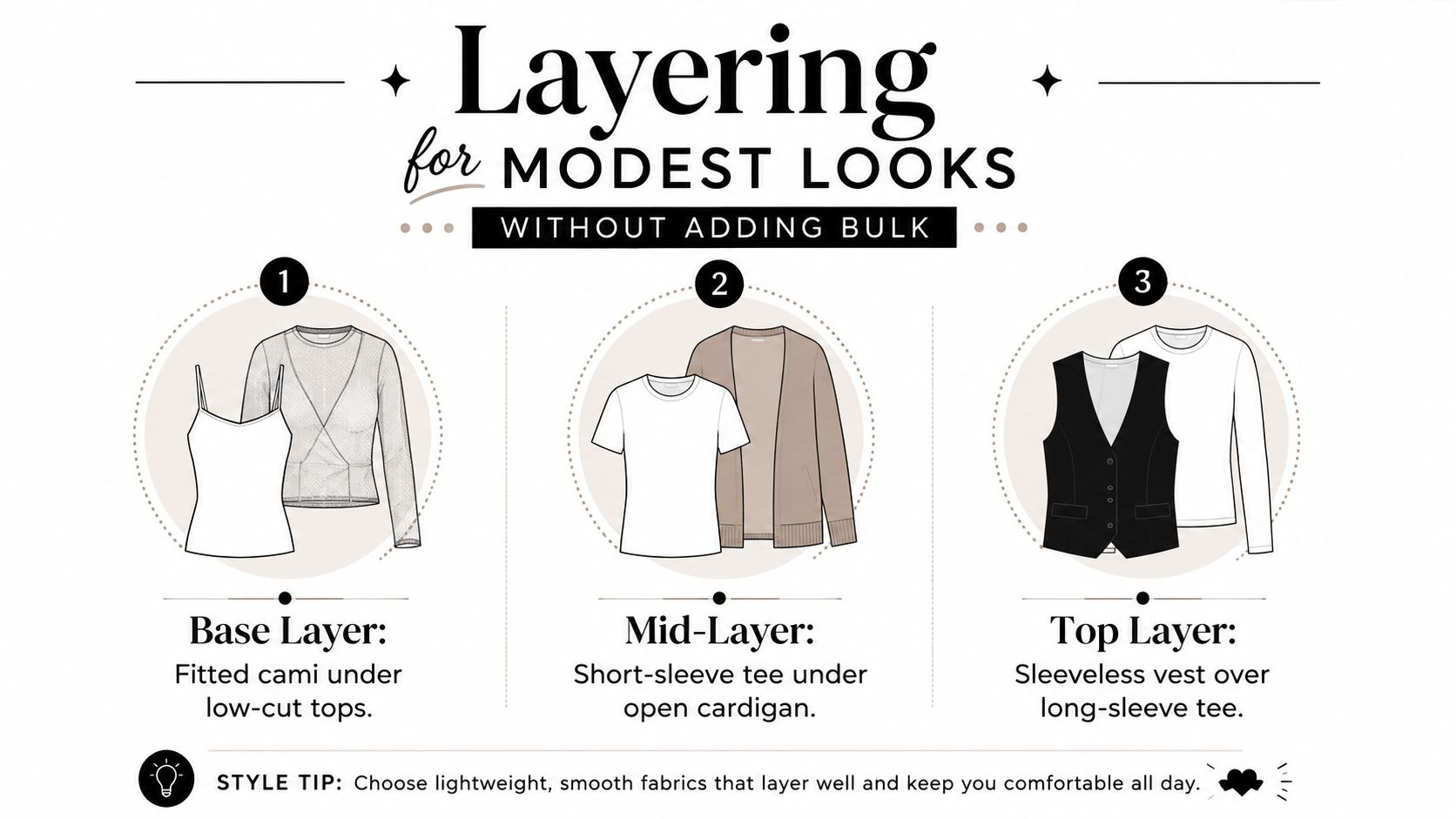
Modest dressing works best when each layer has a job. The mistake is adding random fabric until the outfit feels crowded, then sizing the outer piece too large to compensate. Choose a thin base, a deliberate mid-layer, or extra hem coverage, and account for the exact area that gains volume.
A fitted cami under a sheer or low-cut top
A fitted cami adds a thin line across the torso. It usually won't change the outer garment's size unless the top already fits closely at the bust or has a firm, non-stretch fabric. Match the cami to the neckline and avoid a loose base that bunches under a structured layer.
A short-sleeve tee under a sleeveless dress or jumpsuit
A tee adds more width through the chest, shoulders, and armholes. If the sleeveless piece already sits close around those areas, measure while wearing the tee and consider the larger size. The outer garment should skim the tee without pulling at the armhole or lifting at the neckline.
A midi slip under a shorter skirt
A midi slip primarily adds length and a smooth base beneath the skirt. It usually won't require a larger waist size, but it can affect the hem and movement if the two fabrics cling together. Choose a slip with a clean fall rather than bulky detailing.
Layering rule: Re-measure in the base layer you plan to wear, not the undergarment you happened to wear while shopping.
Avoid placing a bulky knit beneath a structured corset top. The knit creates pressure where the corset needs a clean foundation, and sizing up may leave the bodice loose once you remove the sweater. For more outfit formulas, use how to layer dresses as a reference for balancing coverage, proportion, and movement.
Using the House of Saint Size Guide and Checkout Tools
Open the product's Size Guide before choosing a color or adding the item to your cart. Compare your bust, waist, hip, and inseam measurements with the listed body measurements, not with the size you usually buy. If you're shopping for trousers, inseam can separate two otherwise similar choices because the same waist measurement doesn't guarantee the same preferred length.
Record your measurements in both inches and centimeters if you shop across regional systems. Then identify the largest measurement that applies to the garment. A corset mini may be governed by the bust and ribcage, while a fitted skirt may be governed by the hips and waistband.
Use the product details as the second opinion
Read the fit notes beside the chart. Look for:
- Fabric behavior: Stretch knit, firm woven, denim, lining, and compression each change ease.
- Closure details: Zippers, buttons, corset lacing, and elastic waistbands tolerate different kinds of variation.
- Model references: Height and worn size can help you judge proportion, but they don't replace your measurements.
- Layering plans: A cami, tee, shapewear, or tights may require more room through the relevant body area.
If you're between sizes, choose based on the garment's construction. A firm structured piece usually needs the larger measurement accommodated without forcing the closure. A close-fitting style with genuine stretch may work in the smaller option when you want a defined silhouette. If you're layering, favor room where the base layer adds width.
A smoother online journey depends on clear product information and useful selection tools. This overview of ways to improve Shopify shopping experience provides useful context for evaluating how online stores support fit decisions.
Use size filters to see available options, but don't choose a size only because it matches your familiar letter. If your measurements straddle two rows, your proportions differ significantly from the chart, or a special-event deadline makes an exchange risky, contact support before ordering. Send your measurements, the garment name, intended layers, and the fit you want.
You can also review the retailer's dedicated Size Guide before checkout. Keep your order confirmation and selected measurements so support can troubleshoot efficiently if the fit needs adjusting.
Your Quick Fit Checklist Before You Hit Add to Cart
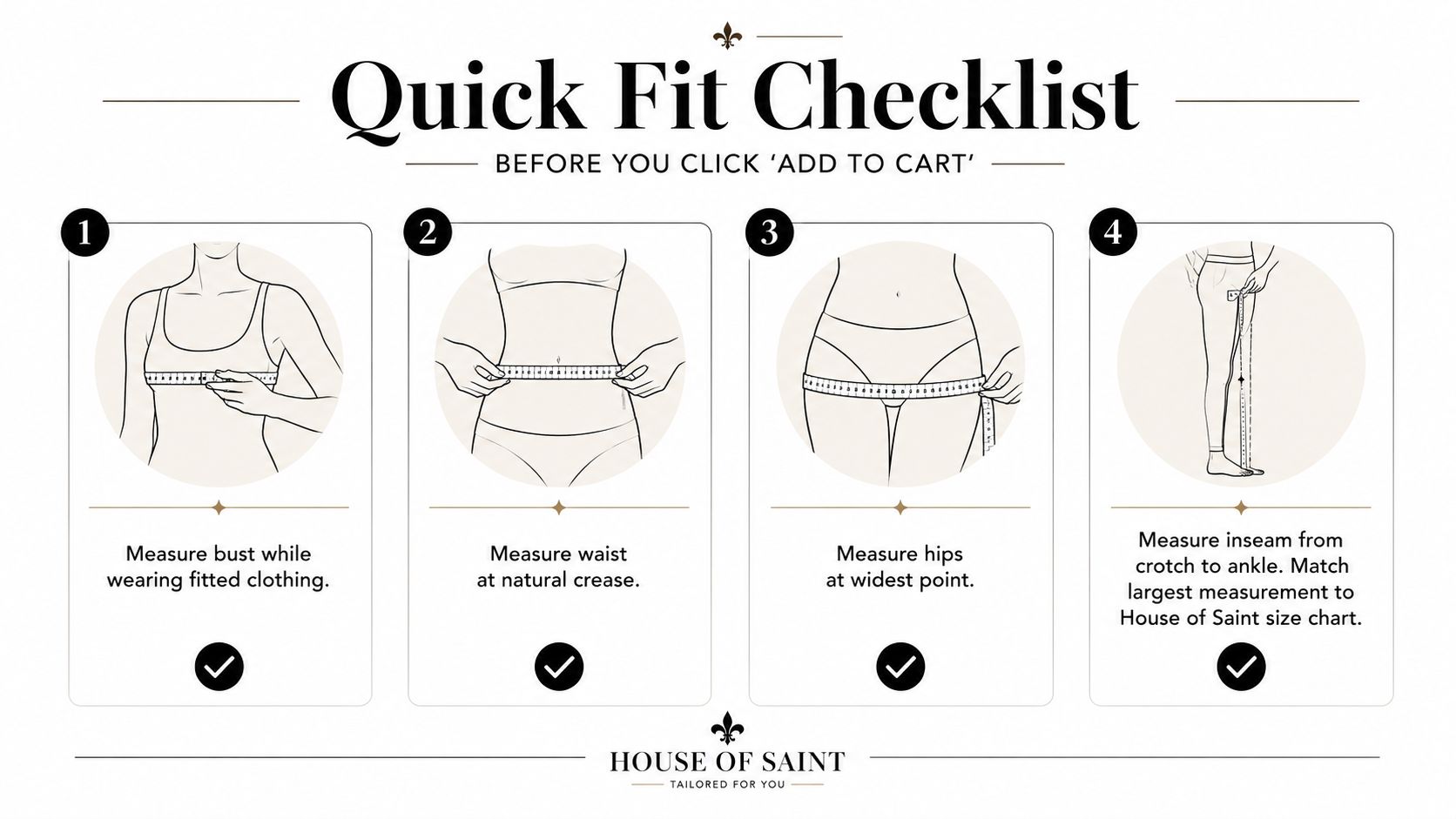
Save this routine and use it every time you order a new silhouette. Familiar labels are less reliable than a fresh measurement check.
- Measure the body: Take your bust, waist, hips, and inseam in fitted clothing. Keep the tape snug without compressing your skin.
- Record the largest relevant measurement: Write each number in inches or centimeters, then match it to the current measurement chart.
- Identify the garment's priority area: A corset mini needs secure bust and ribcage fit. A lounge set needs movement at the hips and a stable waistband. A skirt needs comfort at the waistband and room over the hips.
- Account for layers: Add the cami, tee, shapewear, or tights you'll wear. Size up when the fabric has little give or the intended layer adds noticeable width.
- Confirm the bottom fit: For trousers, check inseam alongside waist and hip measurements.
- Read before paying: Review fabric stretch, closure, fit notes, model reference, and the selected size in your cart.
- Ask early: If your proportions fall across sizes or you need the order for a fixed date, message support with your measurements before checkout.
Frequently Asked Questions About Sizing and Fit
How should I size for a special event?
Measure over the undergarments and shapewear you expect to wear. Leave enough ease for sitting, walking, and eating comfortably. For a structured corset mini, follow the bust and waist guidance closely. For a stretch lounge set, prioritize comfort through the hips and confirm the fabric's stretch notes.
What if I'm buying a gift?
Choose a flexible, less structured style when possible. Don't guess someone's measurements from a clothing label, because labels vary between brands and regions. Request a gift receipt and encourage an early exchange if the item is intended for a particular occasion.
What should I do if a piece arrives and the fit is off?
Compare the garment's actual measurements with your body measurements, then review the fabric and care notes. Contact support with your order number, measurements, and a clear description before removing tags or washing the piece.
If the size is correct but the shape doesn't suit your proportions, ask whether belting, layering, or a different undergarment can improve the result. An inseam issue may call for alteration, while a waist or hip issue may require a size exchange. Check the return window and event date before requesting a change.
House of Saint offers boutique women's clothing built around expressive silhouettes, faith-inspired details, and everyday versatility. Visit House of Saint with your measurements ready, then choose the piece that fits your proportions, your layers, and the way you want to wear it.